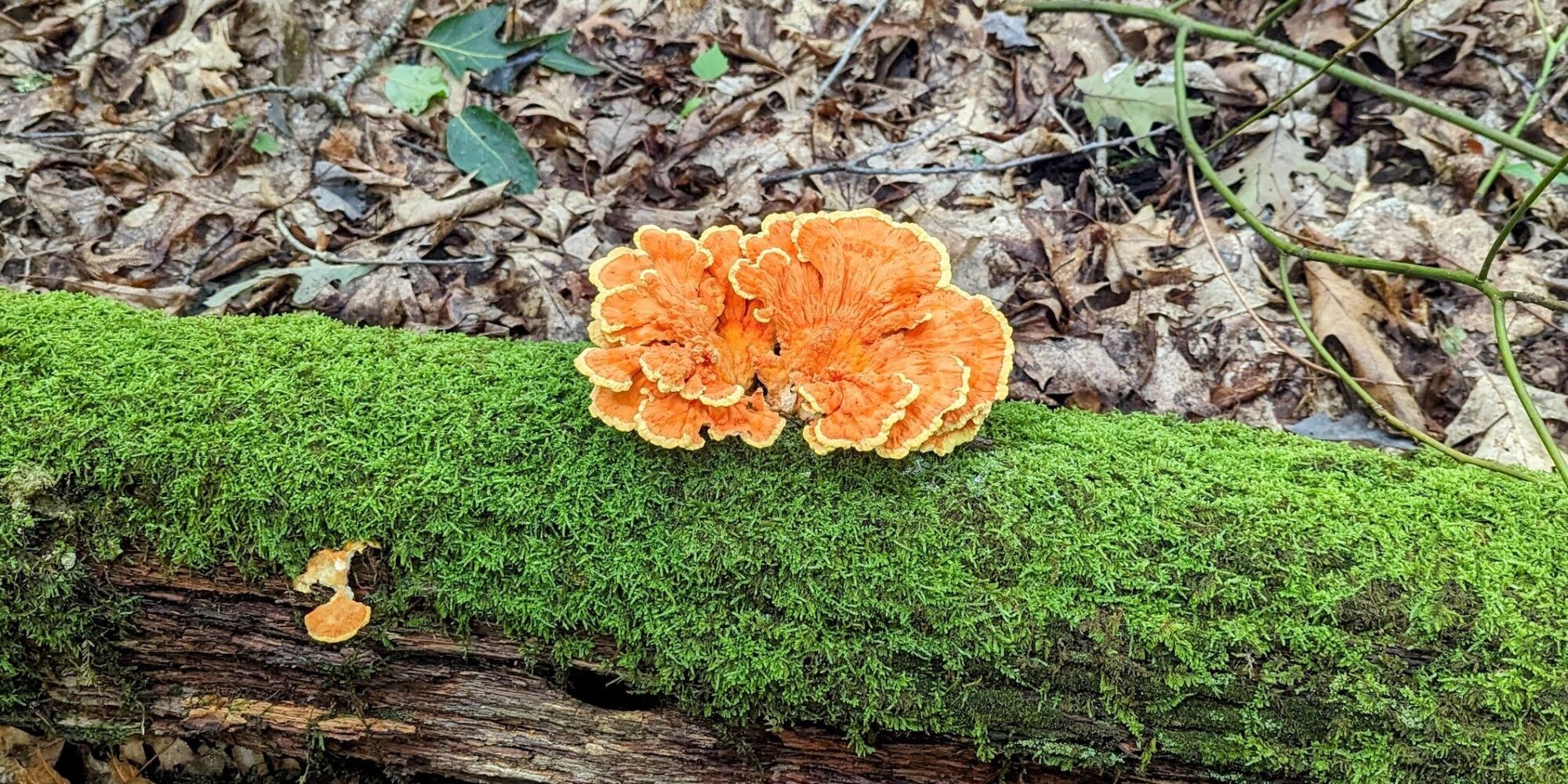
It’s nearing fall again here in the U.S. northeast and the woods are draped in oranges and yellows—and not because the leaves are changing. No, those are mushrooms thriving in the woods. Delicious mushrooms.
With their vibrant orange-yellow color, and jutting off of stumps and dying trees, Chicken of the Woods mushrooms—often referred to as COWs or COTWs—are easy to spot and identify. Plus, their meaty texture make Chickens a prized find for many mushroom foragers.
I’ve never found as many Chickens as I have, and do, here in Appalachia. Drive down the road and you may see a log or tree covered in them. Hit your favorite trail and scan the woods and you may get lucky. Perhaps it’s all these amazing oak trees that also produce an abundance of chanterelles and maitake.
While Chicken of the Woods may first appear in late spring or early summer, around here, it’s typically early fall that I find them in profusion. Understanding where to find Chicken of the Woods mushrooms and when they grow can significantly enhance your foraging success.
What Are Chicken of the Woods Mushrooms?
Chicken of the Woods mushrooms grow on trees in a shelf-like manner, rather than on the ground. They are saprotrophic, meaning they feed on decaying or dead wood, making fallen logs, stumps, and standing dead trees their primary habitats. If you do find a COTW on the ground, it’s likely Laetiporus cincinnatus.
Identifying Chicken of the Woods Mushrooms
There are two types of COWs—Laetiporus sulphureus and Laetiporus cincinnatus—though personally, I find sulphureus more common and abundant here. No matter what type of Chicken you’ve found, it will be fundamentally orange-ish in color.

All Chicken of the Woods have pores on the underside—never gills—and both are delicious. If you find a bright orange mushroom growing on a stump or tree and it has gills, it is NOT a Chicken of the Woods. Don’t eat it.
Laetiporus sulphureus: Most common and incredibly easy to identify, these Chicken of the Woods mushrooms grow off logs or trees in a shelf-like manner. Bright orange on the top, and often featuring yellow edges especially when young, the pores on the underside are typically brilliant yellow or even orange.
Laetiporus cincinnatus: grow on tree roots or buried wood and stand above the ground in a spiral shape. Pale orange and cream—nearly pinkish—in color, they have white to very pale yellow pores underneath.
Where to Find Chicken of the Woods Mushrooms—Habitats & Trees
The preferred habitat for Chicken of the Woods is on dead or dying trees and stumps, though some may grow on buried stumps or roots. Chickens are most commonly found on oak trees. However, they are not limited to oaks and can also be found on beech, chestnut, willow, yew, cherry, and sweetgum.
In some regions, they might even grow on eucalyptus and coniferous trees, though these are less common. It’s crucial to note that the type of tree can affect the mushroom’s flavor and texture.
Geographically, Chicken of the Woods mushrooms are widely distributed across North America and Europe. They thrive in temperate climates and can be found in forests, woodlands, parks, and sometimes even in urban areas with suitable trees.
When Is Chicken of the Woods in Season?
Chicken of the Woods typically fruits in the late spring to early fall and they grow rapidly once they start. They can go from a tiny, barely visible growth to a large, mature mushroom in just a few days. This rapid growth means that if you find a suitable tree, it’s worth checking back frequently. Also, you should also harvest COWs when they are young, tender, pliable, and moist.
The precise timing of when Chickens appear can vary based on geographic location and climate:
Spring: In warmer climates, they can start appearing as early as May.
Summer: This is the peak season in most regions, with July and August being particularly fruitful months.
Fall: In cooler climates, they can continue to fruit until October.

Tips on Where to Find Chicken of the Woods Mushrooms
Know Your Trees: Familiarize yourself with the trees that Chicken of the Woods prefer. Being able to identify these trees even without leaves (in case of dead trees or stumps) can significantly boost your foraging success.
Look High and Low: These mushrooms can grow at any height on a tree. Look both at the base and up the trunk. Sometimes, they are nestled in the crook of branches.
Return to Known Spots: If you find a productive tree, remember its location. Chicken of the Woods can return to the same tree year after year until the wood is entirely decomposed. They may also fruit on nearby trees in following years.
Be Patient and Observant: Foraging requires patience and keen observation. Move slowly and scan your surroundings thoroughly.
Harvest Responsibly: When you find Chicken of the Woods, harvest responsibly. Take only what you need, and leave some behind so that other mushroom hunters can also benefit from the fruit of the forest.
Finding Chicken of the Woods mushrooms can be a rewarding—and delicious—experience for any forager. By knowing exactly where to find Chicken of the Woods mushrooms and the best season to look, you’ll boost your chances of a rewarding harvest of this delicious fungi.